
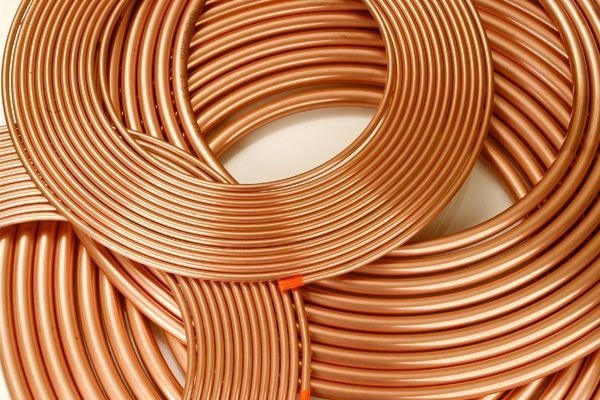
Copper: Historic price surge puts the refrigeration and air conditioning sector on alert.
Copper, a fundamental raw material for the refrigeration and air conditioning sector, has been recording successive increases in the global market, reaching historic levels. Widely used in refrigerant piping, coils, fittings, heat exchangers, and electrical components, the metal is essential to ensure thermal efficiency, reliability, and performance of HVAC-R systems.
The continuous rise in prices is linked to the increase in global demand, especially driven by electrification, the expansion of renewable energy, and industrial growth. At the same time, limitations in mining production, logistical costs, and economic instabilities contribute to supply pressure, keeping copper on an upward trajectory.
For the HVAC-R sector, the impact is direct. The increase in copper costs affects project budgets, refrigeration infrastructure, maintenance contracts, and the final price of equipment and systems. This scenario requires greater financial control, strategic planning, and efficient material management from companies.
In this context, many organizations have been seeking project optimization, waste reduction, material reuse, and more strategic negotiations with suppliers. Although studies are advancing with alternative materials, copper remains technically superior in several critical applications, making its replacement limited in the short term.
The trend is for copper to remain highly valued as long as global demand stays strong. In this scenario, operational efficiency, planning, and smart resource management become decisive factors in maintaining competitiveness and sustainability in refrigeration and air conditioning projects.
 Português do Brasil
  English
  Español