
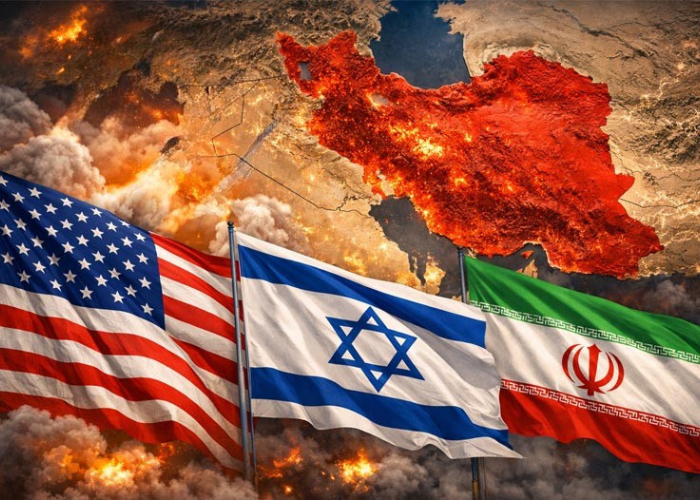
Middle East Crisis: What the Conflict Between Iran and Israel Could Change in the Air Conditioning Market
Conflict Between Iran and Israel and Its Possible Impacts on the HVAC and Engineering Sector
The recent tensions in the Middle East involving Iran e Israel have drawn the attention of governments, economic analysts, and various industrial sectors around the world. Although the conflict is concentrated in a specific region, its effects can quickly spread throughout the global economy due to the strong interdependence between markets, supply chains, and energy flows.
For industrial and infrastructure sectors, such as air conditioning and HVAC engineering, the impacts tend to occur indirectly, but significantly. Issues related to the price of energy availability of raw materials, logistics costs e global economic stability can influence everything from the manufacturing of equipment to the execution of HVAC projects (ou air conditioning projects) in commercial buildings, hospitals, industries, and logistics centers.
In this scenario, understanding the possible geopolitical developments becomes important for companies that operate in engineering, installation, and maintenance of HVAC systems.
The Strategic Role of the Middle East in the Global Economy
The Middle East holds a central position in the global energy market. Countries in the region concentrate a significant share of the world's oil and natural gas reserves, resources that are fundamental to the modern economy.
O Iran, in particular, holds some of the largest oil and gas reserves in the world and plays a significant role in the global energy supply. During periods of instability in the region, the international market tends to react quickly, raising oil prices and increasing volatility in energy markets.
This movement has a cascading effect on various industrial sectors, as oil is not only a source of energy but also the basis for numerous derivatives used in manufacturing processes.
How the Rise in Oil Prices Can Affect the HVAC Sector
Air conditioning equipment depends on a broad industrial supply chain that involves metals, technical plastics, electronic components, and various materials derived from the petrochemical industry.
When oil prices rise, many of these inputs also experience cost increases. Among the main materials impacted are:
-
structural plastics used in equipment housings
-
thermal foams and insulation materials
-
technical rubber and sealing components
-
industrial fluids and lubricants
In addition, the increase in energy costs directly affects HVAC equipment manufacturers, which depend on energy-intensive industrial processes such as metal casting, compressor manufacturing, and the production of electrical components.
As a result, prolonged increases in energy prices may be reflected in the final cost of commercial and industrial HVAC systems.
Impacts on the Industrial Metals Market
Another relevant factor during periods of international conflict is the volatility in the metals commodities market. Strategic metals tend to experience higher demand in scenarios of global instability, both for industry and for sectors linked to infrastructure and defense.
In the HVAC sector, some metals are essential for the operation and efficiency of systems. Copper, for example, is widely used in:
-
refrigeration piping
-
heat exchange coils
-
electric motors
-
electrical cables and connections
Fluctuations in copper prices can directly impact the cost of manufacturing equipment and the execution of HVAC system installations.
Similarly, metals such as aluminum and steel also play an important role in the structure of equipment, heat exchangers, and ventilation systems.
International Logistics and Strategic Transportation Routes
The stability of international maritime routes is another critical point in scenarios of geopolitical tension. Global transportation of goods depends on maritime corridors that connect producing regions to industrial centers and consumer markets.
One strategic example is the Strait of Hormuz, located between the Persian Gulf and the Gulf of Oman. This passage is responsible for a significant portion of global oil transportation.
If restrictions, blockades, or increased risks occur in the region, maritime transportation may experience impacts such as:
-
increase in international freight costs
-
longer delivery times
-
rerouting of trade routes
-
greater pressure on global supply chains
For the HVAC sector, which depends on the import of components, compressors, electronic boards, and complete equipment, any logistical change can affect project and construction timelines.
Reflections on the Construction and Infrastructure Sector
The HVAC sector is directly connected to the construction industry and infrastructure development. HVAC projects are an essential part of commercial buildings, hospitals, industries, data centers, hotels, and logistics centers.
Em cenários de instabilidade econômica global, investidores e empresas tendem a adotar maior cautela em novos projetos. Isso pode resultar em:
-
construction delays
-
review of real estate investments
-
greater selectivity in industrial projects
-
focus on modernization rather than expansion
As a result, the pace of new HVAC projects may slow down during certain periods.
The Growing Importance of Energy Efficiency
Despite the challenges that geopolitical scenarios may bring, they also reinforce an important trend in the sector: the pursuit of greater energy efficiency.
When energy costs rise, companies and organizations place even greater importance on systems that help reduce consumption and optimize operations.
In this context, solutions such as:
-
high-efficiency VRF systems
-
automation and smart HVAC control
-
retrofit of old systems
-
optimization of chilled water plants
-
predictive and preventive maintenance
gain greater strategic relevance.
Projetos que antes eram vistos apenas como modernização passam a ser considerados investimentos importantes para redução de custos operacionais e aumento da sustentabilidade energética.
The HVAC Sector in an Interconnected World
The HVAC and engineering industry is part of a complex global chain that involves international manufacturers, component suppliers, global logistics, and integration with various sectors of the economy.
Geopolitical events, even occurring thousands of kilometers away, can create effects that ripple through markets and directly impact costs, timelines, and investment strategies.
For this reason, companies in the sector need to monitor not only technological advances and engineering trends but also economic and geopolitical movements that may influence the business environment.
Outlook for the Sector
Although it is difficult to predict the evolution of international conflicts, experts point out that periods of global instability tend to accelerate some important transformations in the HVAC sector, such as:
-
greater focus on energy efficiency
-
pursuit of more sustainable technologies
-
emphasis on well-planned projects
-
increased importance of specialized engineering
In this scenario, companies that focus on technical planning, efficient solutions, and strategic vision tend to be better positioned to face times of uncertainty and meet the new demands of the market.
 Português do Brasil
  English
  Español