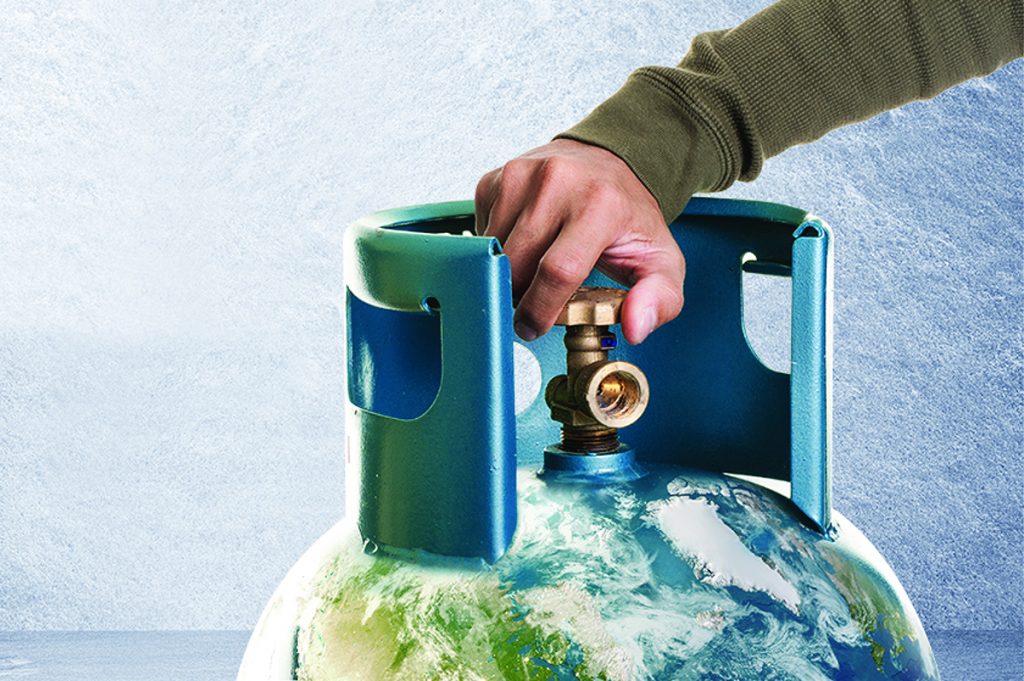
Flammable refrigerant in air conditioning: risk or simple precaution?
Renabrava highlights safety protocols and best practices in the use of flammable refrigerants.
Renabrava highlighted safety in the use of flammable refrigerants as one of its main topics, a subject that is becoming increasingly relevant amid the global transition to lower environmental impact gases.
The meeting brought together manufacturers, engineers, technicians, regulatory bodies, and HVAC-R industry specialists to discuss technical standards, operational risks, professional qualification, and technological advancements related to refrigerants classified as A2L and A3, such as R-32 and R-290 (propane).
Growth in usage and new technical challenges
The adoption of flammable refrigerants has grown rapidly, driven by international agreements such as the Kigali Amendment, which provides for the gradual reduction of high-GWP (Global Warming Potential) HFCs. Alternatives such as R-32 and R-290 offer higher energy efficiency and lower environmental impact; however, they require specific safety precautions.
During Renabrava, specialists emphasized that the risk does not lie in the refrigerant itself, but in improper handling, lack of training, and non-compliance with technical standards.
Leaks in confined spaces, the use of improper tools, or incorrect procedures can create risks of fire, explosion, and operational accidents.
Main precautions reinforced at the event
Among the points most emphasized by the specialists, the following stand out:
Technical training
Professionals must have specific training to work with flammable refrigerants, understanding risk classification, gas behavior, emergency procedures, and operational best practices.
2. Use of certified tools
Electrical equipment, vacuum pumps, leak detectors, and manifolds must be compatible with flammable refrigerants, preventing the generation of sparks or ignition.
3. Adequate ventilation
Installation, maintenance, and storage environments must have natural or mechanical ventilation to prevent gas concentration in case of leaks.
4. Controle de carga refrigerante
Respeitar limites de carga definidos por norma técnica reduz significativamente o risco operacional.
5. Identificação e sinalização dos sistemas
Equipamentos que utilizam fluidos inflamáveis devem estar claramente identificados, garantindo segurança para técnicos, operadores e equipes de emergência.
6. Conformidade com normas técnicas
Foram citadas normas como ABNT NBR ISO 5149, ABNT NBR 16069 e diretrizes internacionais que orientam projeto, instalação e manutenção segura.
Segurança e sustentabilidade caminham juntas
Um dos consensos foi que a transição para refrigerantes de baixo GWP é irreversível. No entanto, a sustentabilidade precisa estar alinhada com segurança operacional e qualificação profissional.
Segundo especialistas, o setor vive uma mudança estrutural que exige:
-
Atualização constante dos profissionais
-
Adequação de oficinas e ferramentas
-
Revisão de procedimentos técnicos
-
Conscientização sobre riscos e prevenção
-
Compromisso com normas e certificações
Impacto para o setor HVAC-R
A Renabrava reforçou que empresas e profissionais que investirem em capacitação, segurança e conformidade normativa estarão mais preparados para o futuro da climatização e refrigeração.
O uso seguro de fluidos inflamáveis não é apenas uma exigência técnica, mas um fator crítico para:
-
-
Redução de acidentes
-
-
Confiabilidade operacional
-
Eficiência energética
-
Sustentabilidade ambiental
-
Valorização profissional
Conclusão
A Renabrava reforça que conhecimento técnico, responsabilidade e segurança são pilares indispensáveis na nova era dos refrigerantes sustentáveis. A evolução tecnológica do setor HVAC-R exige profissionais cada vez mais preparados, conscientes e alinhados às melhores práticas internacionais.
 Português do Brasil
  English
  Español